
Turnkey e-commerce website design and development
We build turnkey online stores that your team runs day to day. We help you with the category structure, product pages, payment and shipping, the legal pages required for selling to consumers, and search engine optimization (SEO) for Google. At the end, we show you how to add products and process orders.
Request a quote Call us: +40 731 433 433











What you get
Catalog and categories
Categories, attributes, and filters built around the way customers search for your products.
Product pages
Large photos, clear descriptions, variants (size, color), stock, and shipping information next to the order button.
Payment and shipping
Card payments through the processor you choose, cash on delivery, and your shipping methods and costs.
Consumer and legal pages
Terms, returns, privacy policy, the consumer information from the ANPC (Romania’s National Authority for Consumer Protection), and cookie consent.
SEO for your store
Category titles and descriptions, structured data for products, clean URLs, and no duplicate pages.
Easy to manage
We show you how to add products, how to process orders, and what to check every week.
Online store projects
Real websites we built, all live today.
-
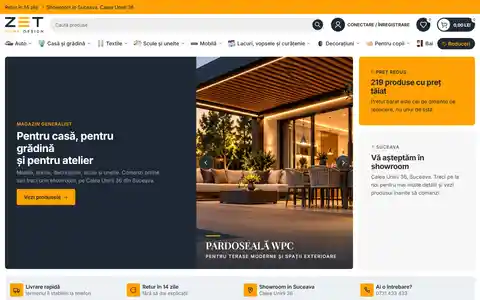
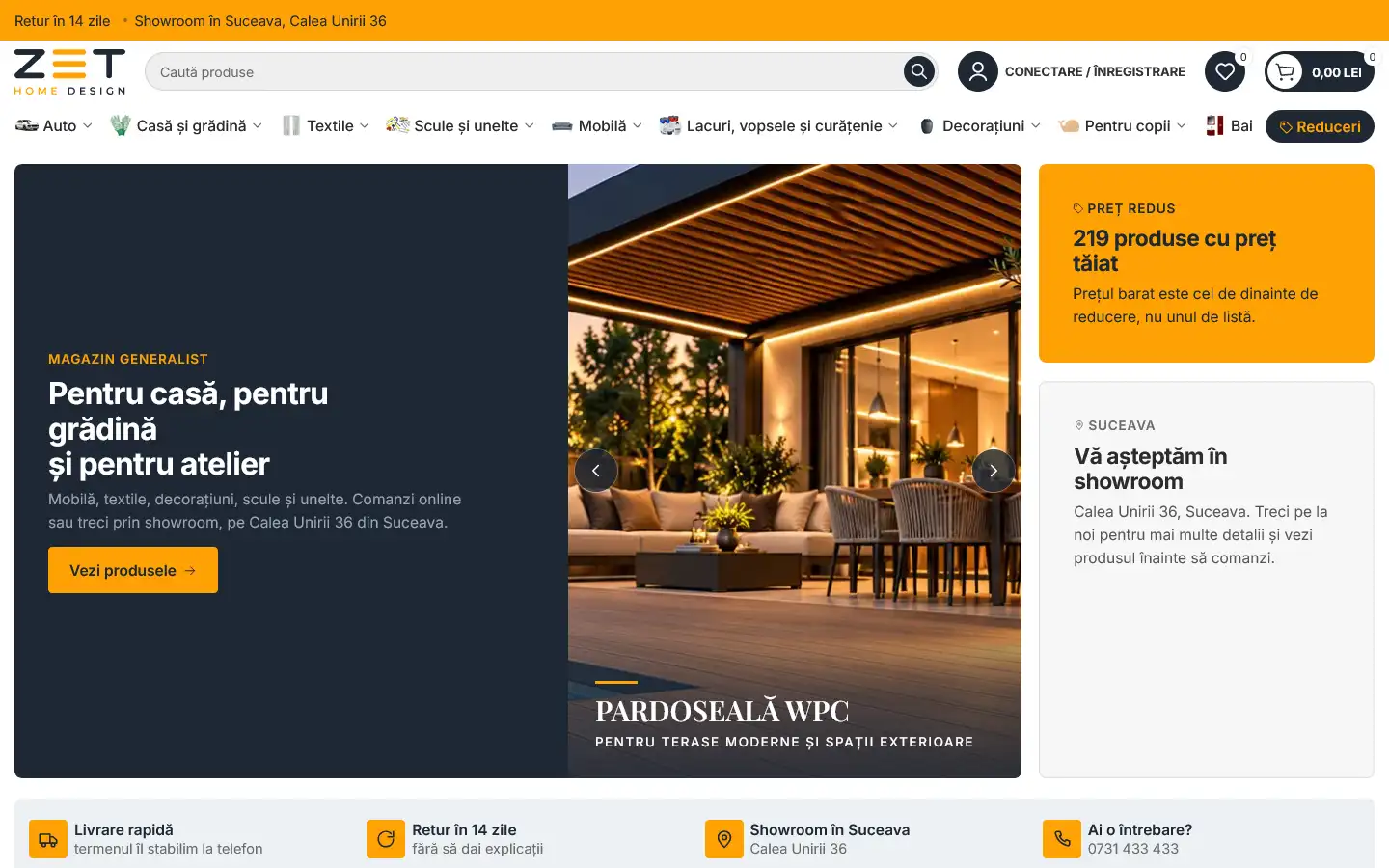
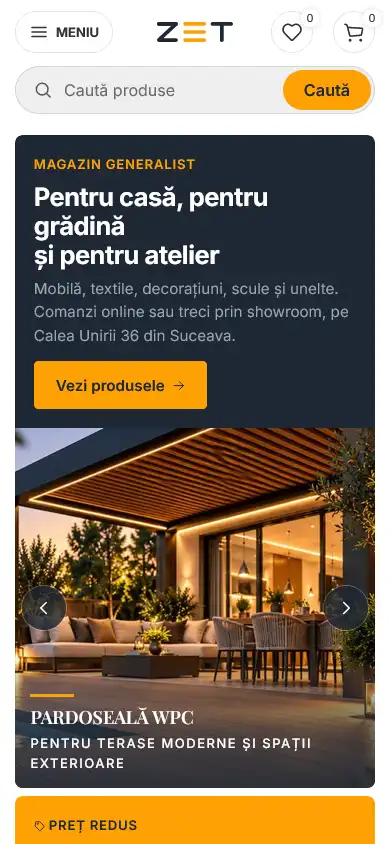
ZET Home Design
Online home decor store in Suceava, with a showroom: furniture, textiles, home and garden, tools, and car accessories.
See the project -
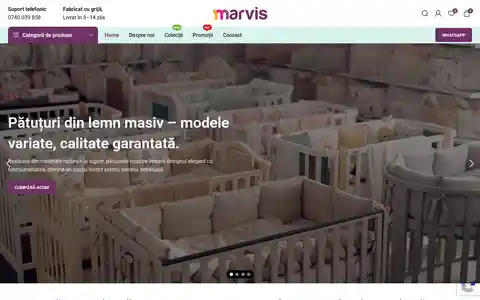
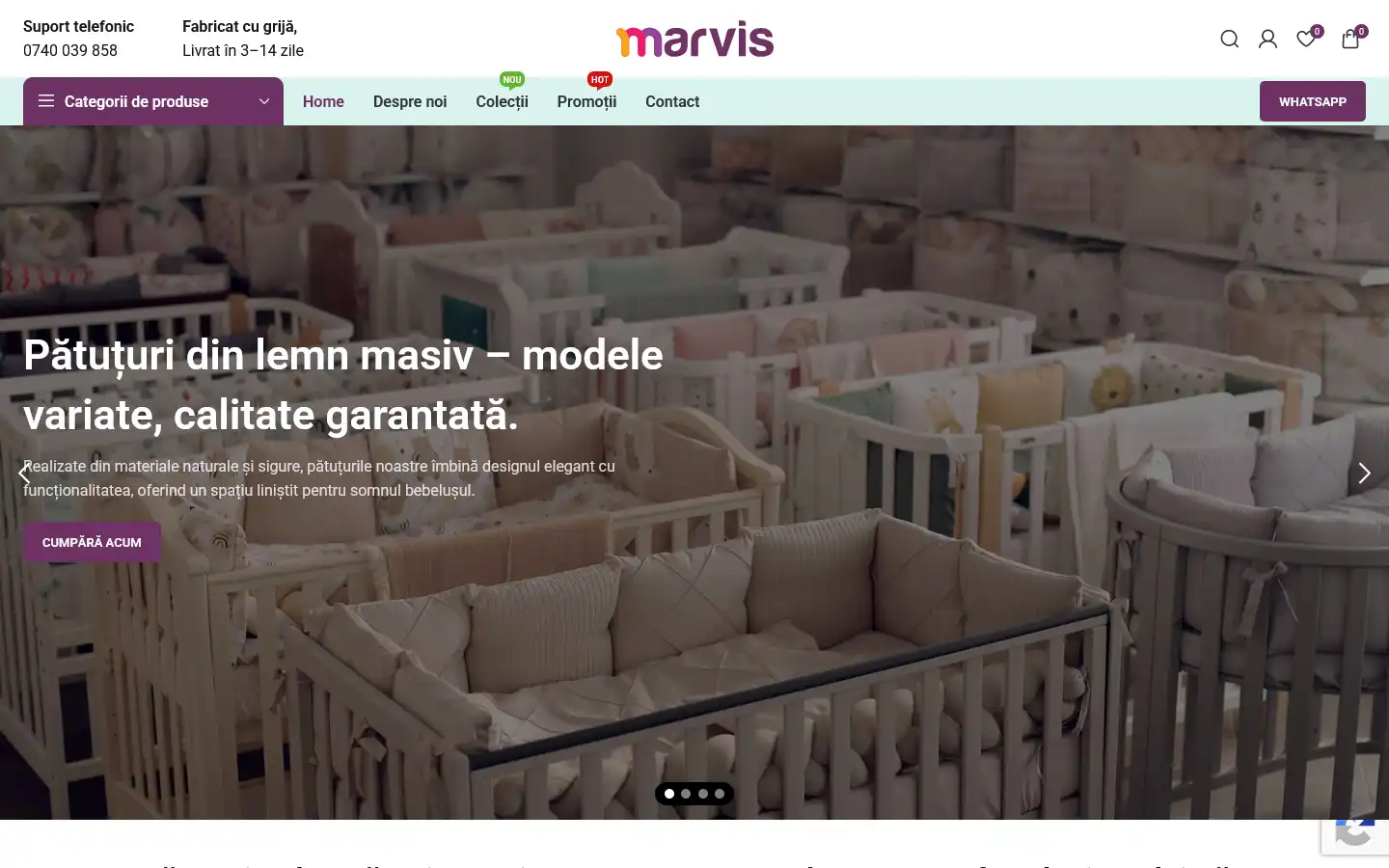
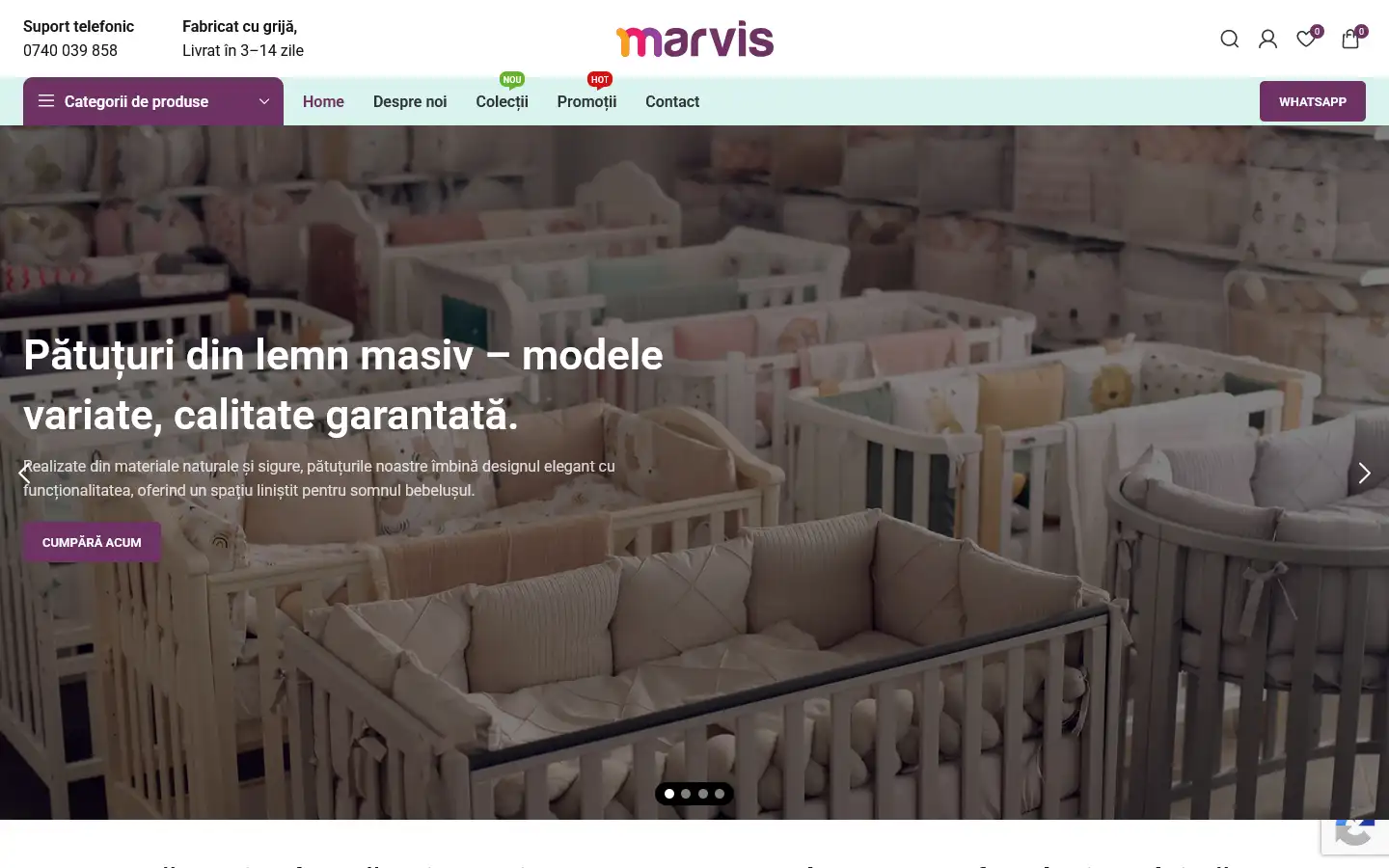
Marvis – patuturi.ro
The Marvis online store: cribs made of solid beech wood, furniture for the baby’s room, bedding, strollers, and car seats.
See the project -
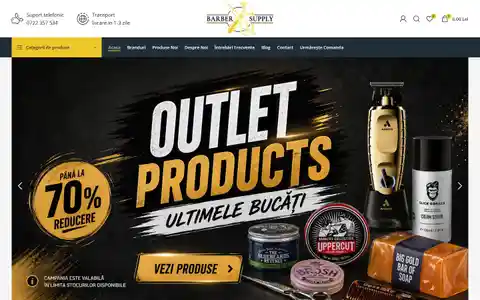
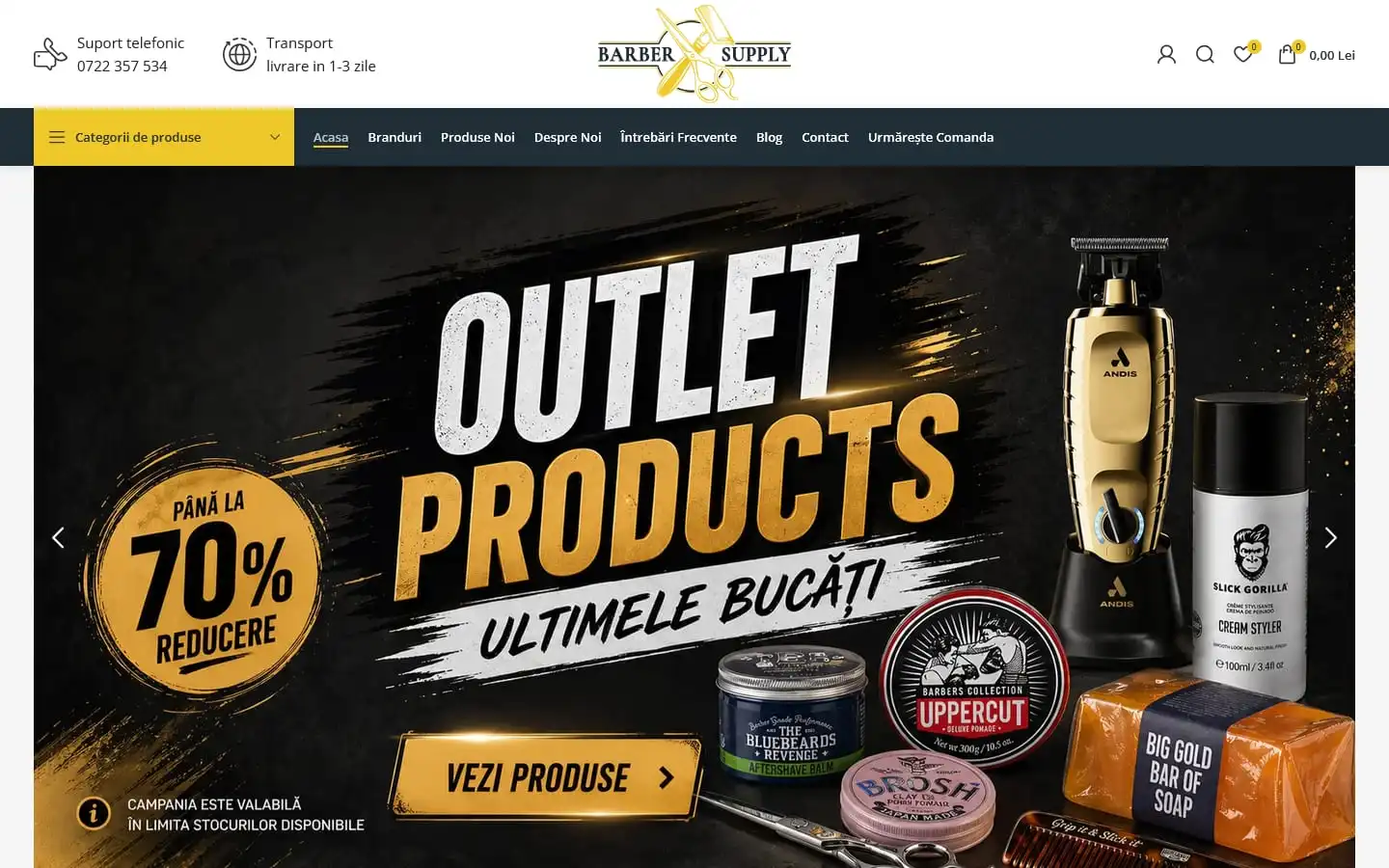
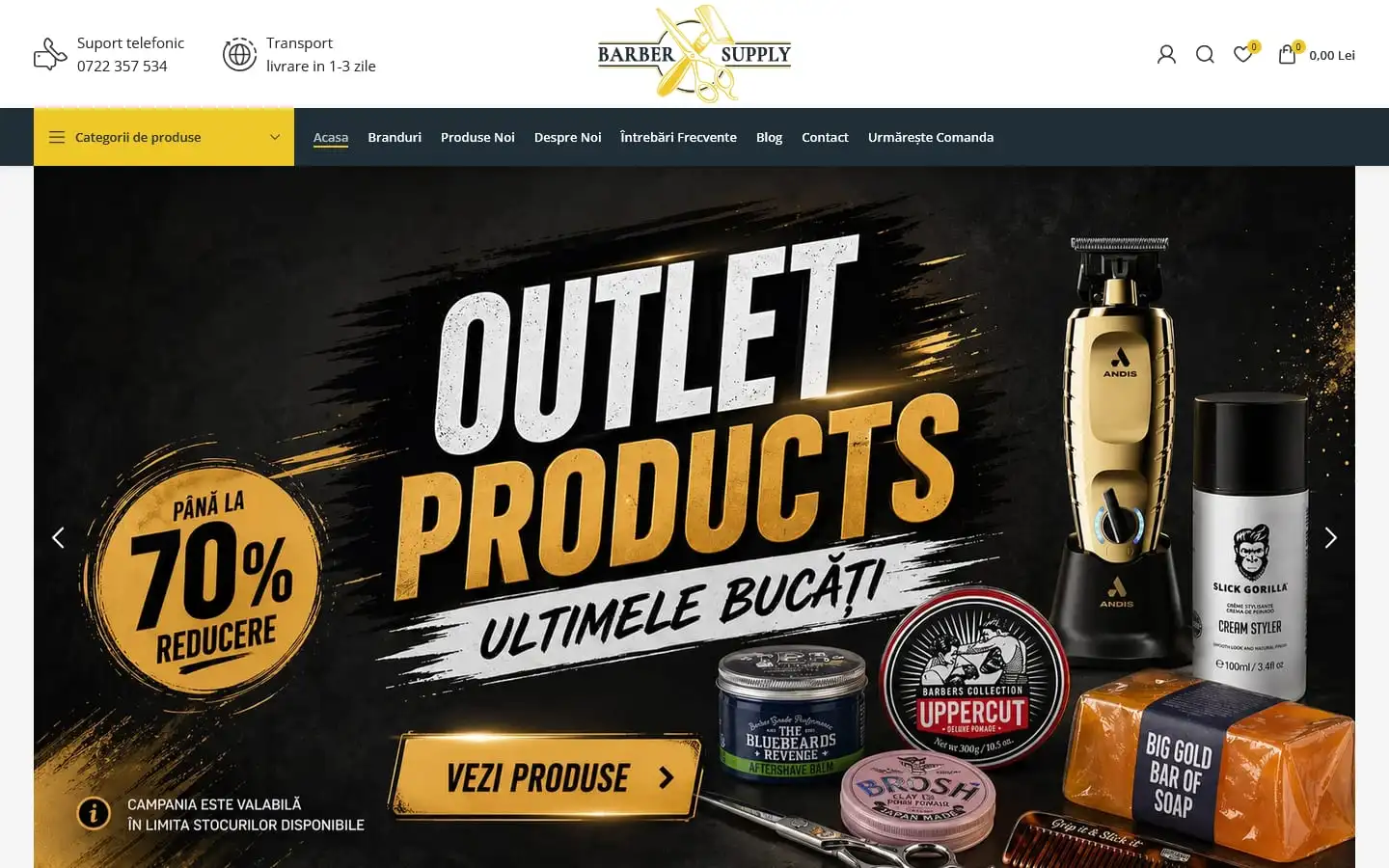
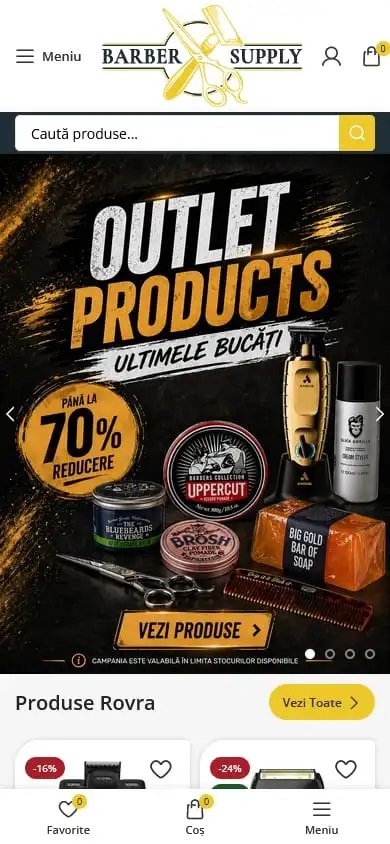
Barber Supply
Suceava online store for professional barbershop and salon supplies: more than 3,000 items from over 100 brands, a custom logo, and a blog with haircut guides.
See the project

Want a quote for an online store?
How we work
The same process for every project, so you always know which stage we’re at.
Step 1 of 5
Analysis
We look at your products, shipping, payment methods, and how your team handles orders.
Step 2 of 5
Catalog structure
We define the categories, the attributes, and the information each product has.
Step 3 of 5
Design and build
We build the category pages, product pages, cart, and checkout, mobile first.
Step 4 of 5
Payments, shipping, and legal
We set up payment, shipping, and the required pages, then place test orders.
Step 5 of 5
Launch and training
We publish the store and show you how to run it.
Online store or catalog with phone orders?
Not every business needs a shopping cart. If your products are made to order, have variable prices, or sell mostly over the phone, a well-organized online catalog can be enough to start with, and it costs less to maintain. That’s how coroanecuflori.ro is set up: the catalog shows the dimensions and price of each product, and the home page recommends ordering by phone or email, with the phone number shown on every product; the cart remains an option for anyone who prefers to order online.
If you sell fixed-price, in-stock products to consumers across Romania, a full online store brings you orders outside business hours too. Before we send a quote, we talk openly about which option is right for you. The differences are explained in detail in our guide to choosing between a business website and an online store (in Romanian), and if you want a quick answer, the “What website do I need?” quiz asks you six questions and shows you the right option.
What a turnkey online store means
Turnkey means you get a store that’s ready to sell. We take care of the catalog structure, the category and product pages, the cart and checkout, payment and shipping, the legal pages, and the basic setup for Google and Google Analytics 4.
It also covers adding the products at launch, by hand or from a supplier file, test orders with payment and shipping, and training the people who will work with the store. After launch, the store is yours: you run it yourself, and we stay available for updates and changes.
What’s still up to you, even with a turnkey store
“Turnkey” doesn’t mean there’s nothing left for you to do. A few things depend on your company or on other providers, and it’s best to know about them from the first conversation, so they don’t turn into surprises after launch:
- the contracts with the payment processor and the courier: you sign them, in your company’s name, and we connect payment and shipping to the store
- the payment processor’s fees and the courier’s rates, which you pay directly to them, separately from the store
- invoicing and tax reporting, which you set up with your accountant
- the final review of the legal texts by your company’s lawyer or accountant
- the day-to-day orders: confirmation, packing, handover to the courier, and returns
What affects the cost of an online store
The cost of an online store depends less on the design and more on how complex the catalog is and how many systems need to be connected. These are the factors we check before the quote:
- the number of products and categories, plus their variants: sizes, colors, dimensions
- importing the products from a file or a supplier feed, and how often prices and stock need to be updated
- the connections to the payment processor, the courier, and the invoicing software
- different prices for businesses and consumers, multiple languages, or multiple currencies
- who writes the descriptions and who takes the product photos
- moving an existing store while keeping its URLs and Google rankings
How to compare quotes for a turnkey online store
On paper, quotes for a turnkey online store look alike, but they can cover very different things: for a similar price, you might get a store that’s ready to sell or just an installed theme with no products. Before you choose, ask every company the same questions:
- Who owns the store? The domain, files, database, and accounts should be in your company’s name, so you can change the hosting or the team that runs your store at any time.
- What do you pay once, and what do you pay every month? Ask how much hosting, licenses, and maintenance cost after the first year.
- Who adds the products, how many, and from what file? Some packages hand over an empty store.
- Are the connections to the payment processor, the courier (generating shipping labels, called AWBs in Romania), and the invoicing software included, or just a promise that they “can be connected”?
- Are the legal pages written for your company, or are they a generic template?
- Is the design made for your products, or is it a theme where only the logo and colors change?
- Who handles updates and backups after launch, and how quickly do they step in if the store stops working?
- If you’re moving an existing store, will the old URLs and Google rankings be kept?
- Can you see live stores built by the same team and place an order in them like any other customer? You’ll find the ones we’ve built in our portfolio.
Product pages that answer questions
Customers can’t touch the product, so the page has to answer the questions they would ask in a physical store: what it looks like up close, what size it is, what it’s made of, when it will arrive, and how much shipping costs. Shipping and return information sits next to the order button, not hidden on a separate page.
Descriptions copied from the supplier appear word for word on dozens of websites and don’t help you in Google. Your most important products deserve original copy; for the rest, we at least fill in the attributes, so the filters work. In a large catalog, search and filters make the difference: on bucovinatuning.ro, for example, customers search for parts by car make, model, and year.
Legal requirements for an online store
A store that sells to consumers in Romania has more obligations than a business website. We prepare the pages and settings below, and it’s a good idea to have your lawyer or accountant check their final text as well, because it depends on how you operate.
- your company’s identification details, always visible: name, registered office, registration number, tax ID, and contact details
- terms and conditions, covering the order steps, payment, shipping, and warranties
- the returns policy, information about the 14-day right of withdrawal, and how customers can withdraw online
- final prices including VAT, and the shipping cost, shown before the order is placed
- a clearly worded final order button, so customers know they are committing to pay
- a privacy policy and consent for cookies that are not strictly necessary, as required by the GDPR
- the ANPC’s SAL icon on the home page, linking to the ANPC platform for alternative dispute resolution (SAL)
- on each product page, the manufacturer’s name and postal and email address (or those of the responsible person in the EU, if the manufacturer is based outside the Union), the product’s identification details, with a photo, and the safety warnings, required since December 13, 2024, by Article 19 of Regulation (EU) 2023/988 on general product safety
Online stores in Suceava and across Romania
Enic Web Design has its office in Suceava, at Calea Unirii 36, and has built online stores for local businesses: zet.ro, for home and garden, with a showroom in the city; patuturi.ro, for wooden cribs and children’s products; betrom.ro, for wooden doors and windows; and bucovinatuning.ro, for car tuning parts.
If you also have a physical store, the website can show its address, business hours, and in-store pickup, while your Google Business Profile sends local customers to the same products. With companies in other cities, we work remotely, following the same steps.
What to prepare in advance
Payment processors usually review the website before they activate card payments, so the legal pages and company details need to be complete before launch. To get the store running without delays, gather these early:
- your product list, ideally in an Excel file, with prices, product codes, and stock
- good-quality photos of each product
- the payment processor and courier you’ve chosen, or at least a conversation already started with them
- your shipping and returns rules: costs, delivery times, and who pays for return shipping
- your company details and the person who will process orders
What matters after launch
An online store is a living system: products, prices, and stock change, and the platform and its extensions get updates. We tell you from the start what maintenance the store needs and who does it.
- updates for the store and its extensions, checked before they go live
- backups of the files and the database
- test orders after every major change
- tracking sales and traffic sources in Google Analytics, with consent
Frequently asked questions
How much does a turnkey online store cost?
The cost depends mainly on the number of products and variants, importing from suppliers, and the connections to payment, the courier, and invoicing. Once we’ve seen your catalog and the way you work, you get a written quote with each part listed separately. Also factor in the monthly costs: hosting, the payment processor’s and the courier’s fees, and maintenance. When you compare several quotes, check first what the price includes: who adds the products, whether the payment and courier connections are included, and what you pay after the first year.
How long until I can start selling?
We put the timeline in the quote, once we know the size of the catalog and how quickly we’ll have the products, the photos, and the contracts with the payment processor and the courier. Activating card payments depends on the processor, so it’s worth starting early.
Do I own the store and the data?
Yes. You have full control over the store and its data, with no monthly subscription to a rented platform.
Can you import products from a file or from a supplier?
Yes, if there’s a file or a data feed with the products. We check the exact format before the quote.
Who adds the products?
We can add the products at the start, and after launch your team can add them on its own. We’ll show you how.
What payment methods can I offer customers?
Card payments through the processor you have a contract with, cash on delivery through the courier, and bank transfer, which is especially useful for business customers. We decide together what makes sense for your customers and for your costs.
Do I need the ANPC icon on my website?
Usually, yes, if you sell or advertise online to consumers in Romania. The SAL icon goes on the home page, with a link to the platform run by ANPC, Romania’s consumer protection authority. The old link to the EU’s Online Dispute Resolution (ODR) platform is no longer required. We set them up when we build the store.
Does my online store need to be accessible to people with disabilities?
Law No. 232/2022 on accessibility requirements for products and services, which transposes the European Accessibility Act into Romanian law, has also applied to e-commerce services for consumers since June 28, 2025. Microenterprises that provide services, meaning companies with fewer than 10 employees and an annual turnover or balance sheet total of no more than €2 million, are exempt. If your company is larger, accessibility requirements are part of the conversation from the start, along with the design of the store.
Can I turn my business website into an online store?
Sometimes, yes, if the website was built with that in mind. Often it’s simpler to build the store as a new project and keep the URLs of the old pages that bring in visits. We’ll tell you which option fits once we’ve seen your website.
Do you also promote the store?
Yes, through SEO and Google Ads or Meta Ads campaigns. See our SEO and Google Ads and Meta Ads campaigns pages.
Ready to talk about your project?