
SEO agency in Romania for business websites
Search engine optimization (SEO) helps you show up in Google when someone searches for exactly what you offer. We start with an audit of your website, fix the technical problems, match your pages to what people search for, and work on your local presence. Then we track the results in Google Search Console and explain in plain language what has changed.
Request a quote Call us: +40 731 433 433
Already have a website? Check it for free, no account needed












What you get
SEO audit
Indexing, speed, structure, titles, duplicate content, structured data, and broken links.
Technical fixes
Redirects, sitemap, robots.txt, canonical tags, images, and mobile speed.
Content for real searches
Pages that answer what customers search for, with titles and descriptions written for people.
Local SEO
Google Business Profile, the same contact details everywhere, the contact page, and structured data for your business.
Measurement
Search Console and Google Analytics: searches, clicks, and the pages that rise or fall.
Plain-language reports
What was done, what changed, and what comes next, without jargon.
First, see where your website stands
Enter your website address and get 34 automated checks across 6 areas: Google, mobile and speed, security, AI assistants, the legal requirements for businesses in Romania, and how your link looks when someone shares it on Facebook or WhatsApp. Free, with no account and no email.
The full SEO audit goes further: your Search Console data, the competition for your searches, and a task list ranked by importance.
Check your website for freeWhat you get in an SEO audit
The audit is a PDF report written for the person who runs the business, not a list of errors exported from a tool. The chapters below are the ones in the report we hand over to a client (x.ro in the image), in the same order.
The first three things to do
Right on the first page, before any detail. If you read only one page, you know where to start.
How we worked and what we couldn’t see
What we checked: every URL in the sitemap, the main pages measured several times on mobile and desktop, and searches in the cities you serve. We also state openly what we couldn’t see, such as your Search Console data if you haven’t given us access yet.
Scores by area
Technical and Google, content, structured data, mobile and speed, the cities you serve, the competition, and AI assistants. If you sell online, your store gets its own chapter, and if you already run Google Ads campaigns, so do your ads.
What works well
The strong parts of your website, so they stay untouched while we fix the rest.
The most important problems
Each one with its evidence: the exact URL, a screenshot, or what a customer sees on their phone.
The plan, in order of impact
In stages: in the first week, whatever is hurting the site right now; over the next two weeks, the page structure; in the second month, content and trust; then month-by-month tracking.
What we can do and how we move forward
A short conversation, read-only access to Search Console and Analytics, then a quote in stages, so you start with what pays off most.
The free website audit above checks a single page automatically. The SEO audit covers your entire website, factors in the competition for your search terms, and ends with the plan.
Request an SEO auditSEO projects
Real websites we built, all live today.
-
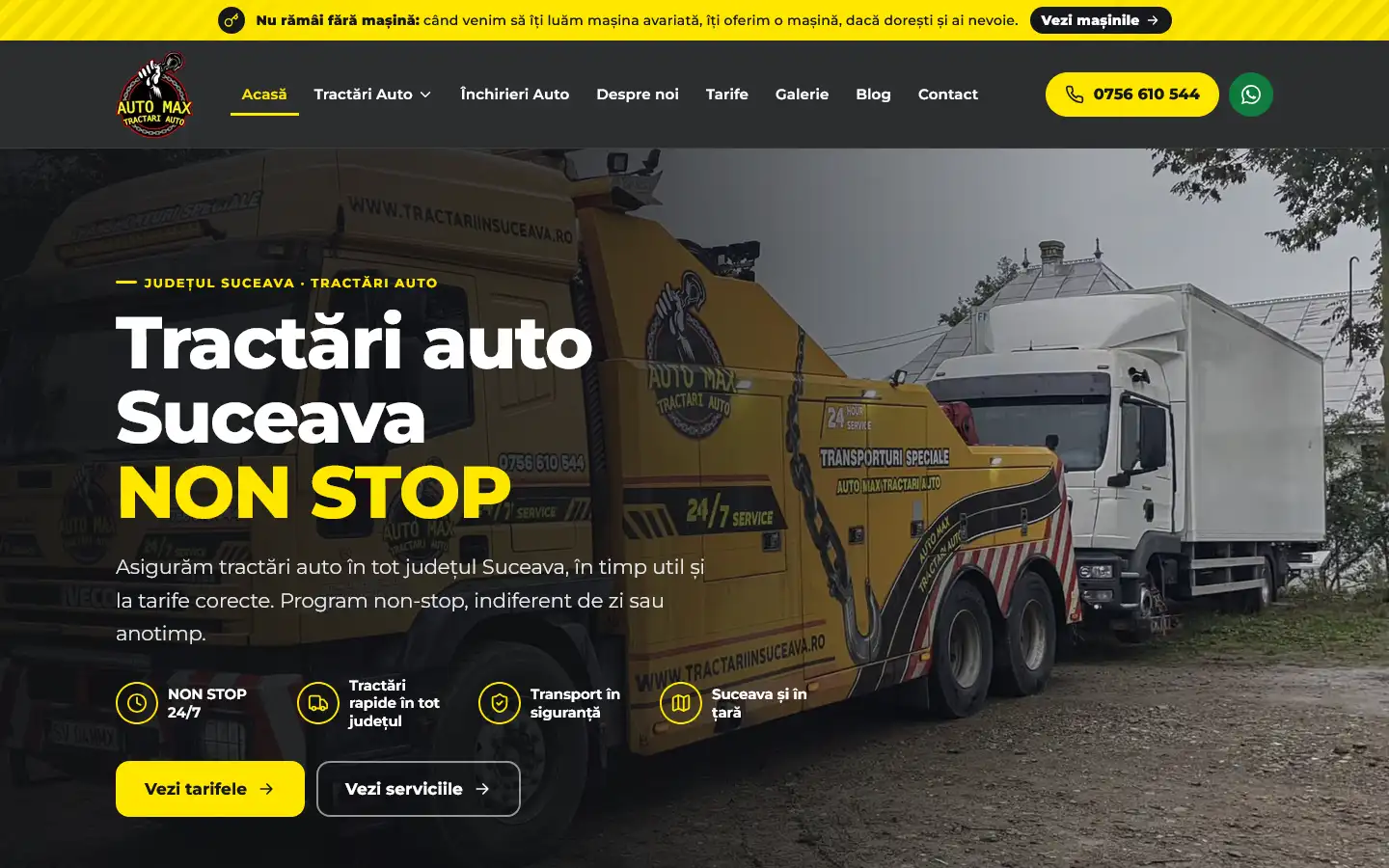
AUTO MAX – Tractări Auto
New website for a 24/7 towing company in Suceava, with published rates and a page for every town and village in the county.
See the project -
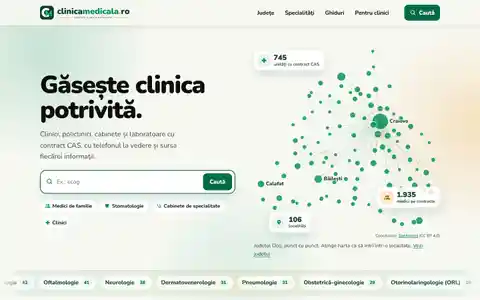
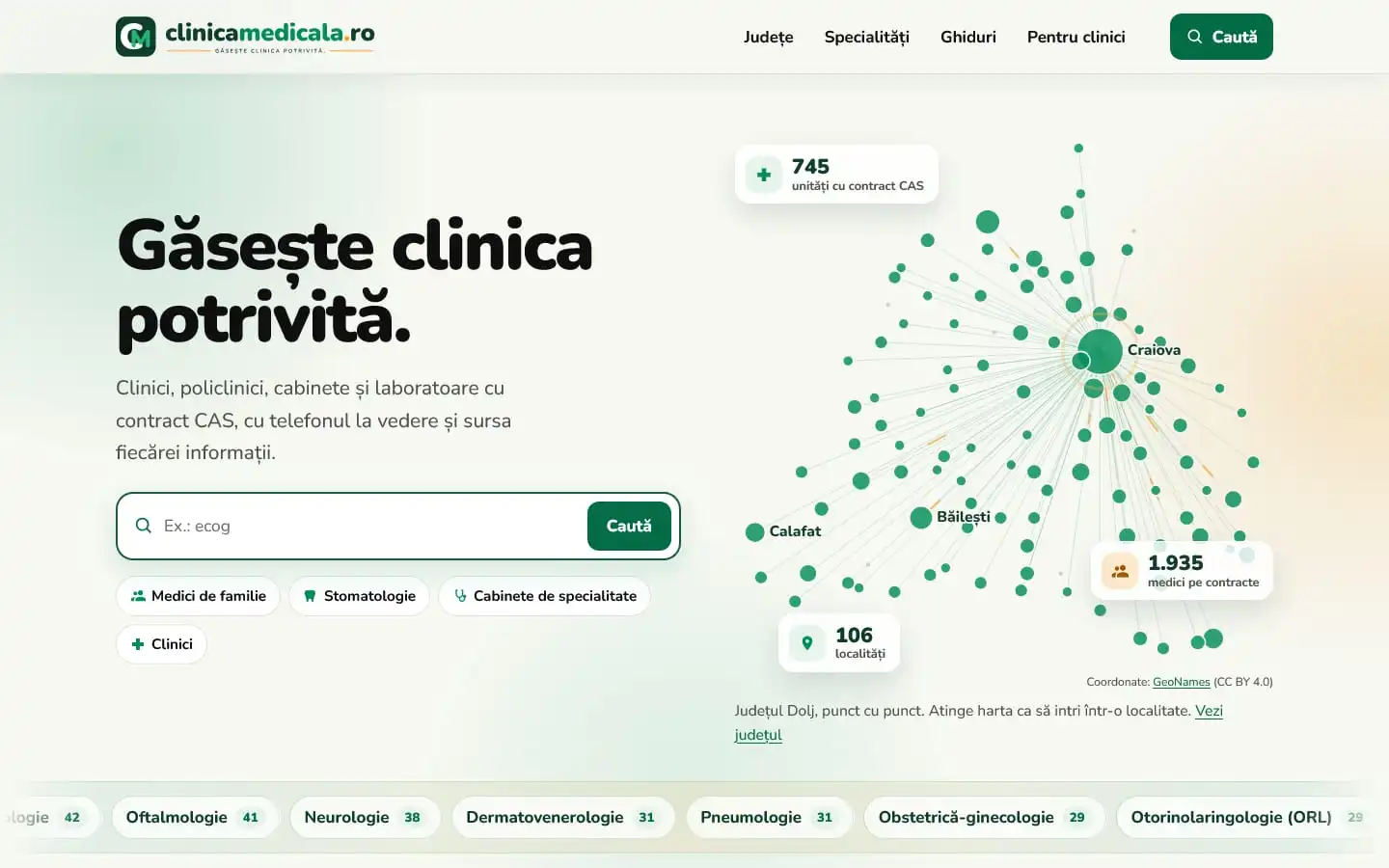
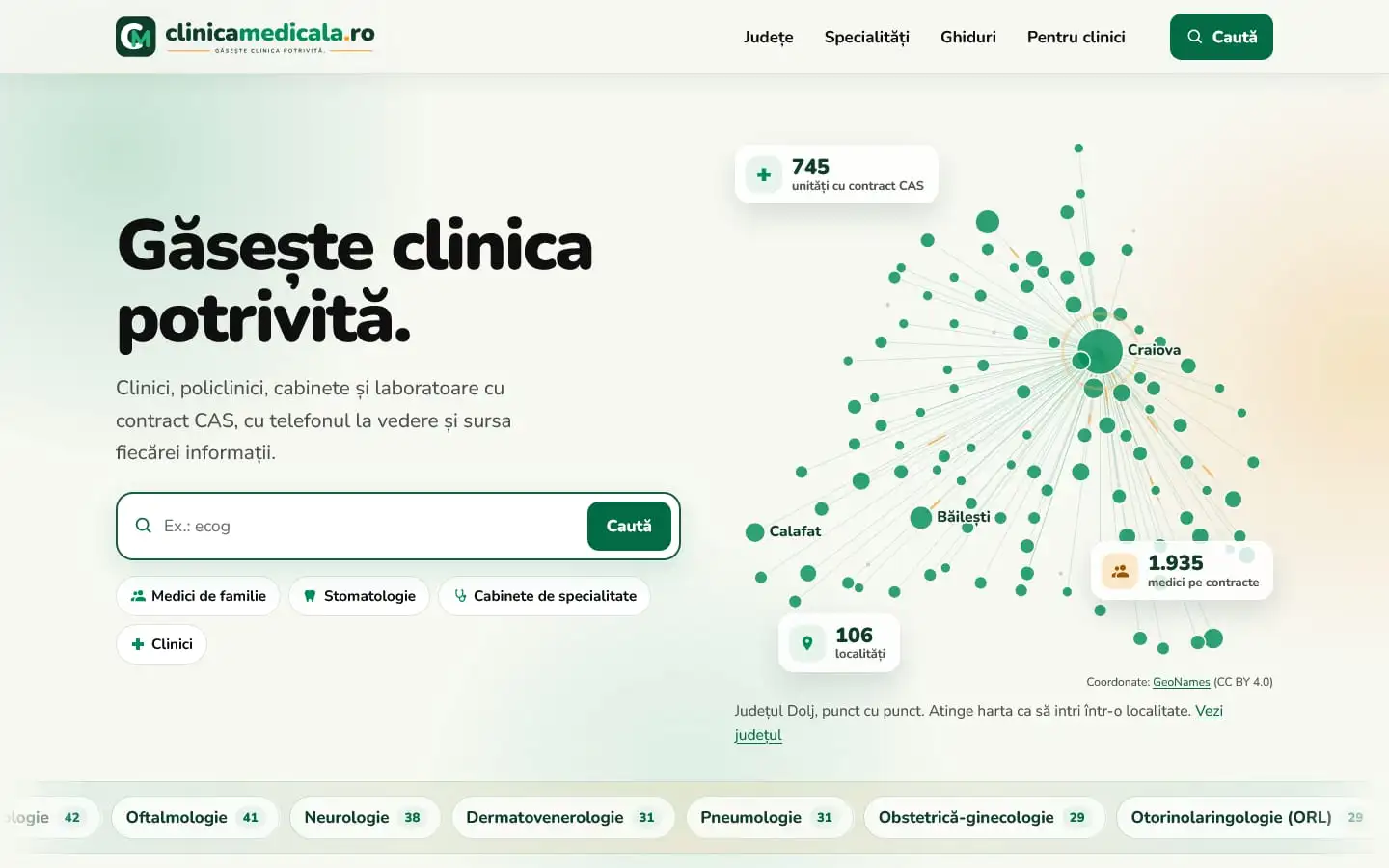
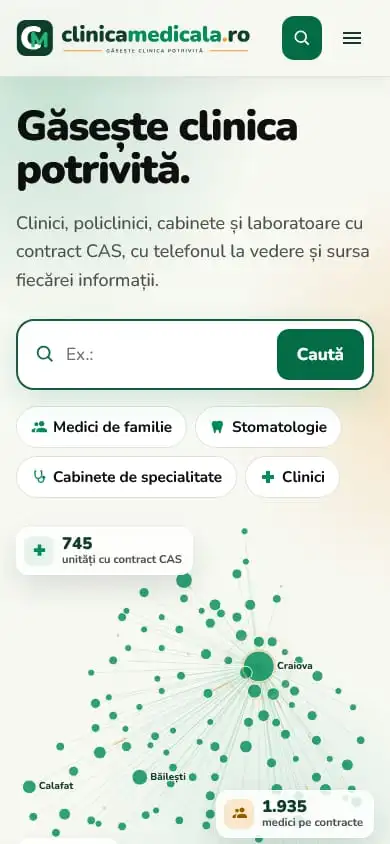
clinicamedicala.ro
Directory of clinics, outpatient centers, practices, and labs that have public health insurance contracts, showing phone numbers, maps, and sources.
See the project -
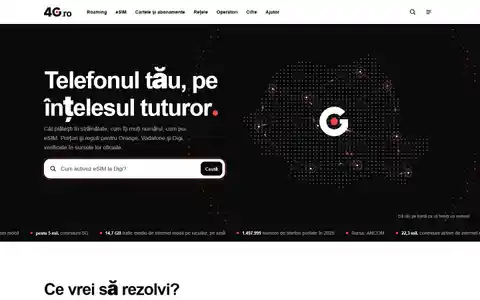
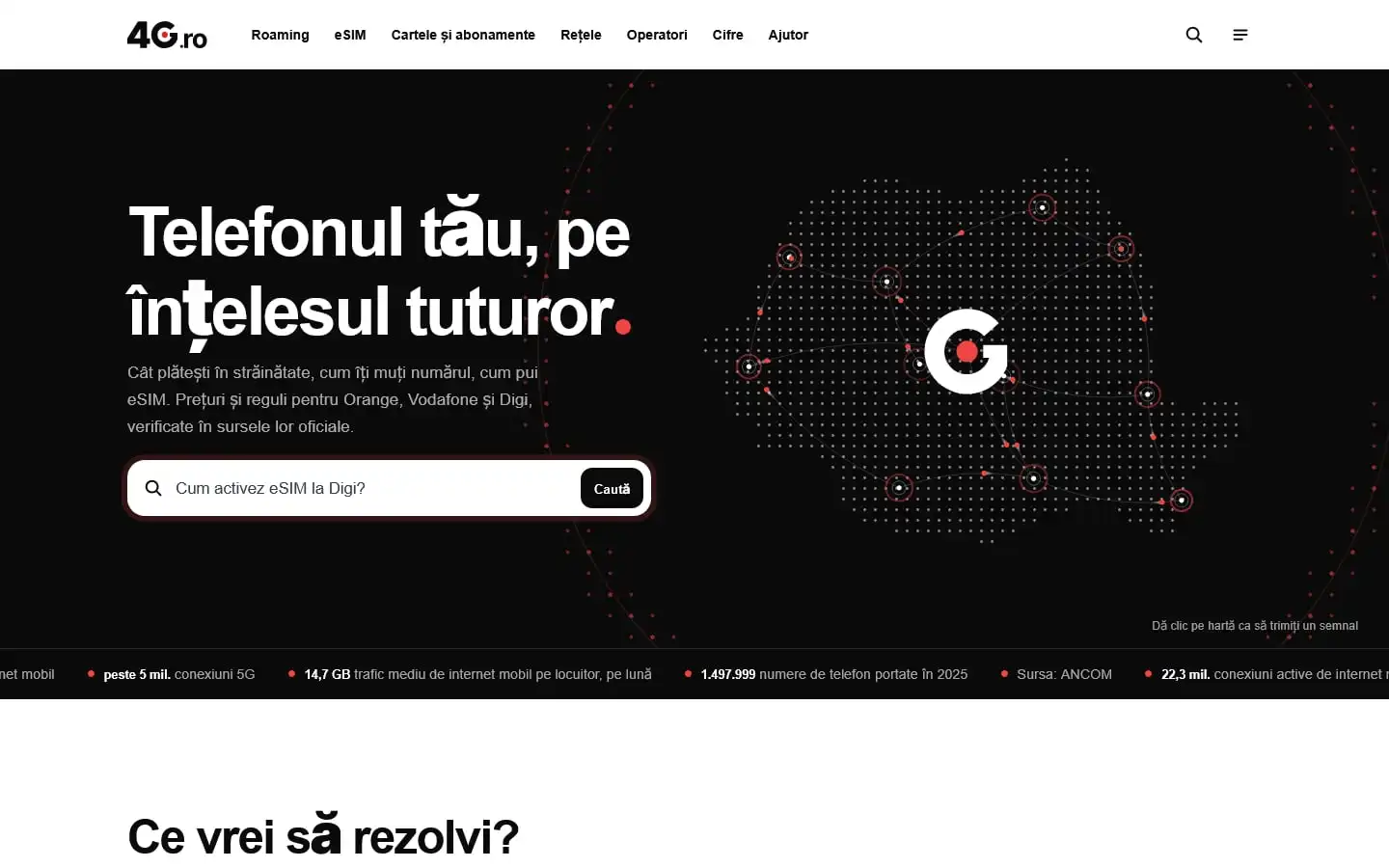
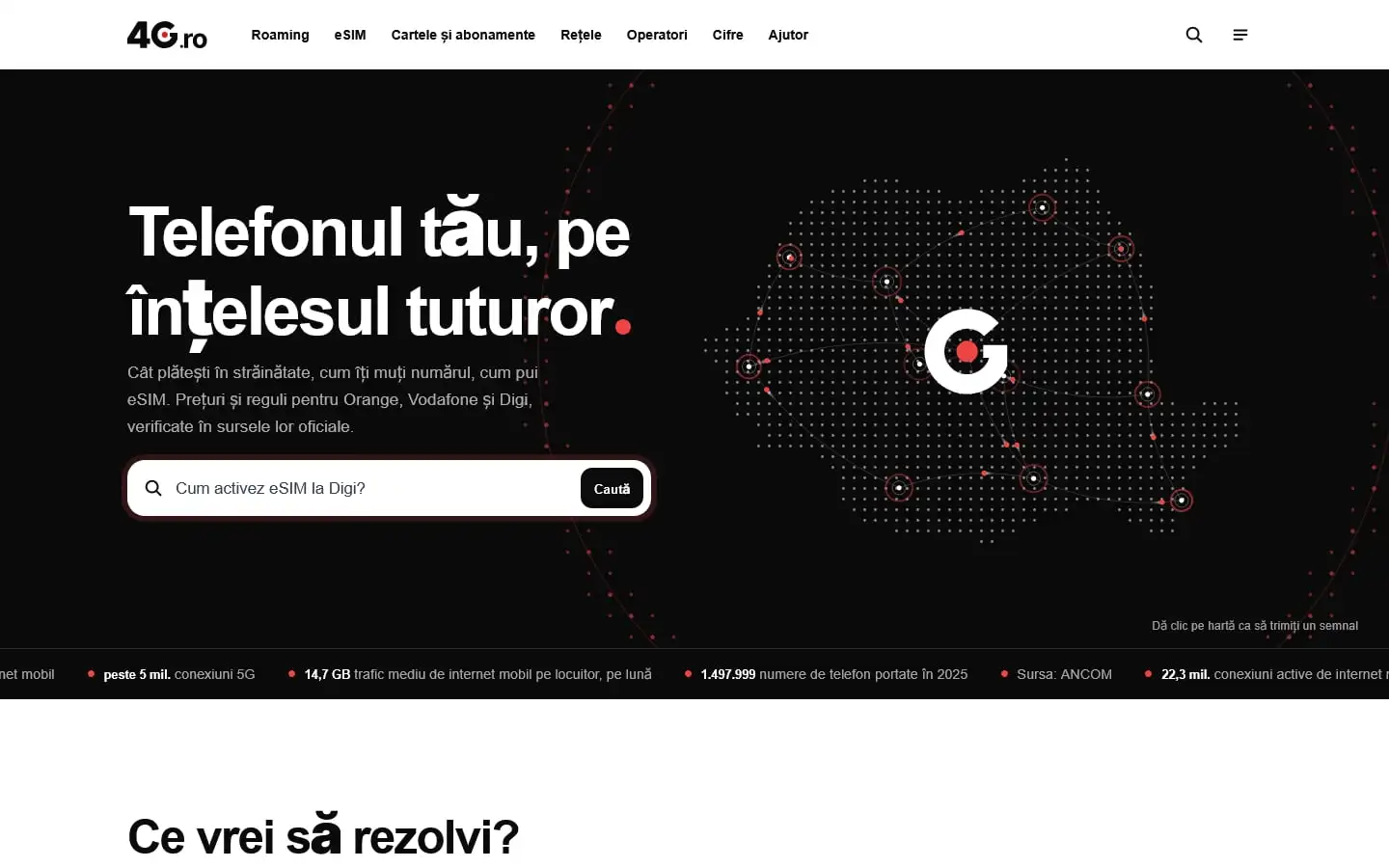
4G.ro
Guides to Romania’s mobile networks: roaming, eSIM, number porting, prepaid cards, and plans, with prices checked against official sources.
See the project

Want a quote for SEO?
How we work
The same process for every project, so you always know which stage we’re at.
Step 1 of 5
Audit
We analyze your website, your Search Console data (if you have it), and the competition on the important searches.
Step 2 of 5
Plan
You get the list of problems and opportunities, sorted by impact and effort.
Step 3 of 5
Fixes
We first solve the technical problems that block indexing or slow down the website.
Step 4 of 5
Content and local
We improve the existing pages, add what’s missing, and work on your Google Business Profile.
Step 5 of 5
Tracking
Every month, we review searches, clicks, and pages, then adjust the plan.
What SEO can and can’t do
No one can guarantee first place in Google: Google decides the order of the results, and your competitors are working too. What we can do is remove what’s holding you back, make your pages better than your competitors’ for the searches that matter, and measure your progress accurately.
SEO results take time. Technical fixes sometimes show up quickly; new content needs weeks or months to be indexed and valued.
On-page SEO: what we fix on your website
On-page optimization covers everything about your pages: what they say, how they’re built, and how easily Google can read them. This is usually where the first gains come from, because everything depends on your website, not on anyone else. We check and fix:
- a separate page for each important service, instead of a single page with all your services
- titles and descriptions that contain what people search for and persuade them to click
- a single main heading (H1) per page, with subheadings that follow your customers’ questions
- internal links between pages on the same topic
- compressed images, with alt text that describes them
- structured data for your business, services, products, and FAQs
- mobile speed (in Romanian) and the indexing errors reported in Search Console
Off-page SEO: trust from outside your website
Off-page means the signals that come from outside your website: other sites that mention you or link to you, your Google Business Profile, reviews, and listings in business directories. They help Google understand how well known and credible your business is.
We work with links that make sense: suppliers and partners, industry associations, local media, and reputable directories. Bought link packages and networks of sites built only for links aren’t worth it: Google’s rules treat them as spam, and a penalty costs more than any short-term gain.
SEO for AI assistants: ChatGPT, Gemini, Perplexity, and Claude
A customer can hear about your business from an AI assistant, not just from Google: they ask it which company it would recommend, and the assistant searches the web and cites the pages it finds. For your business to appear in the answer, your website first has to be readable by the assistant’s crawler. Here’s what each company officially says about it:
- Google (AI Overviews and AI Mode)
- Google says that “there are no additional requirements to appear in AI Overviews or AI Mode, nor other special optimizations necessary.” A page only needs to be indexed and eligible to be shown in Google Search with a snippet, which is exactly what regular SEO works toward.
- ChatGPT
- ChatGPT search has its own crawler. OpenAI writes that “sites that are opted out of OAI-SearchBot will not be shown in ChatGPT search answers, though can still appear as navigational links.”
- Claude
- Anthropic says that disabling its search crawler, Claude-SearchBot, “prevents our system from indexing your content for search optimization, which may reduce your site’s visibility and accuracy in user search results.”
- Perplexity
- Perplexity explains that “PerplexityBot is designed to surface and link websites in search results on Perplexity.”
- Training AI models is a separate decision
- OpenAI and Anthropic use different crawlers for training AI models than for search. Google has a separate setting for training, which, according to Google, “does not impact a site’s inclusion in Google Search nor is it used as a ranking signal in Google Search.” Whether your business’s content can be used for training is a separate choice from appearing in search.
A good website can be missing from these answers without the owner knowing it: a security setting on the server or the content delivery network blocks the assistants’ crawlers, the robots.txt file was copied from another site, or the important pages aren’t indexed in Google. In our SEO audit, we also check what AI assistants see when they open your site. You can see part of it right now, for free, with our free website audit, which also shows whether AI assistants have access.
No one can guarantee that an AI assistant will recommend your business: the answers change from one question to the next and from one person to another. What you can control is making sure your site can be read and clearly says who you are, what you do, where you work, and how a customer can contact you.
Local SEO for businesses in Suceava
For businesses that serve customers in the city or the county, local searches matter most, such as “auto repair Suceava,” “pastry shop Suceava,” or “gas installer Suceava.” This is where your Google Business Profile (in Romanian), genuine reviews, and consistent contact details on your website, on maps, and in directories come into play.
We check that your name, address, and phone number are written the same way on your website, in your Google Business Profile, on Facebook, and in business directories. We fill in the categories, services, hours, and photos in your profile, and we show you how to ask satisfied customers for reviews without buying them or offering anything in return, because Google’s rules prohibit that.
If you work in several towns, it’s worth having separate pages for the important areas, each with its own information, not the same page copied with a different town name. The tractariinsuceava.ro website, for example, has pages for the towns in the county.
An SEO agency based in Suceava: who you work with
Based in Suceava, in northeastern Romania, Enic Web Design provides SEO for business websites in the city and across the country. SEO is led by Elvis Chiribuca, one of the two Enic founders, who handles SEO and online marketing. The technical side, meaning speed, structure, and code, is handled by Nicu Ițco, the other founder, who builds the websites. You talk directly to them, with no account manager in between.
Our office is in Suceava, at Calea Unirii 36, and we work with local businesses interested in searches in the city and the county, as well as with companies that sell across Romania. Because we also build websites, we can make the fixes we find in the audit ourselves, so you don’t have to look for another team.
How to choose an SEO company: the questions Google recommends
Google has a guide for businesses that want to hire someone for SEO, “Do you need an SEO?” From it, we took the questions worth asking any SEO company, including us. Each item starts with the question Google recommends, followed by our answer.
- Can you show me examples of your previous work?
- The projects in our portfolio are live websites, with links to them, so you can check them yourself.
- Do you follow the Google Search Essentials?
- Yes. We don’t buy link packages, we don’t use networks of sites built only for links, which Google’s rules treat as spam, and we don’t buy reviews, which Google prohibits.
- What kind of results do you expect to see, and in what timeframe? How do you measure your success?
- Technical fixes can show up within a few weeks; new content needs a few months. In Google Search Console and Google Analytics 4, we measure impressions, clicks, rankings, and the inquiries that come from Google.
- What’s your experience in my industry?
- In our portfolio, you’ll find our projects by industry: towing and auto repair, a pastry shop, installation services, transport, and online stores. Ask us about the ones closest to your business.
- What’s your experience in my country/city?
- Our office is in Suceava, at Calea Unirii 36, and we work with companies in the city, in Suceava County, and across Romania.
- What’s your experience developing international sites?
- We have a few clients in the UK, and the LPD Transport website is in four languages.
- How long have you been in business?
- The Enic Web Design brand has existed since 2017, and the company that operates it, PROUNIX SRL, since 2011.
- How can I expect to communicate with you? Will you share with me all the changes you make to my site, and provide detailed information about your recommendations and the reasoning behind them?
- You talk directly to the two founders, with no account manager. In our report, we explain what we did, what changed, and what comes next, in plain language.
- Are you interested in me and my business?
- The audit starts from your competitors on the searches that matter and, if you have Search Console, from the searches customers already use to find you.
The warning signs Google tells you to watch for
The same Google guide lists the signs of an SEO company you shouldn’t trust. Watch out for a company that:
- claims to guarantee rankings, alleges a “special relationship” with Google, or advertises a “priority submit” to Google; as Google puts it, “no one can guarantee a #1 ranking on Google”
- won’t clearly explain what it intends to do on your website; Google is clear that “you are responsible for the actions of any companies you hire”
- talks about link popularity schemes or submitting your site to “thousands of search engines”
- emails you out of the blue to say your site doesn’t show up in search engines
- asks for full access right from the audit; at this stage, Google advises you to “only grant read access to Search Console.” For an audit, read access to Search Console and Analytics is all we need, and we ask for access to your website’s admin only if we also make the fixes
SEO for online stores
In an online store, the categories usually bring in the most traffic from Google, because people search for “wooden cribs,” not for a product code. That’s why each category needs a good title, a short and useful description, and a clean URL.
Typical store problems are filters that generate thousands of nearly identical URLs, descriptions copied from the supplier, and out-of-stock products that disappear and leave errors behind. We solve them with canonical URLs, clear rules for filters, structured data for products, and redirects for products that are permanently discontinued.
What affects the cost of SEO
You can ask for an audit only, with the list of fixes in order of importance, or for ongoing work, with tasks and a report every month. Here’s what shapes the quote:
- the size of your website and its technical condition at the start
- the competition for the searches you care about: a plumber in a small town is in a different position from a store that ships nationwide
- the target: a city, a county, or the whole country
- how much new content needs to be written, and who writes it
- whether we make the fixes or give the list to the team that maintains your website
- access to the code: on some websites, certain changes can’t be made without a partial rebuild
How we measure results
In Google Search Console, we track impressions, clicks, average position, and pages for the important searches, compared with the previous period. In Google Analytics 4, with visitors’ consent, we see what people who come from Google do: which pages they read, and how many of them call or submit the form.
The monthly report sums up what we did, what changed, and what comes next. We don’t report cherry-picked rankings: a good ranking for a search nobody makes doesn’t bring in customers.
Frequently asked questions
How soon will I see results?
The effect of technical fixes can show up within a few weeks. New content and competitive searches usually take a few months. We show you the progress in Search Console.
Do you guarantee the top spot in Google?
No. No one can guarantee a ranking, and anyone who promises one is misleading you. We commit to the work we do and to clear reports.
How much does SEO cost?
The price depends on the size and condition of your website, the competition, and how much content needs to be written. You can start with an audit, which shows you exactly what needs to be done, and then decide whether we work together every month.
What do I get in an SEO audit?
A PDF report written for the person who runs the business: the first three things to do, what we checked and what we couldn’t see, a score for each area, what works well, the most important problems, each with its evidence, and a step-by-step plan in order of impact. The chapters are described above, under “What you get in an SEO audit.”
What’s the difference between SEO and Google Ads?
Google Ads brings you visitors from day one, as long as you pay for the clicks. SEO works on the organic results, where you don’t pay per click; they grow more slowly, but they don’t stop the day your budget runs out. Many businesses use both: ads at the start, SEO for the long term.
Do I need SEO if I only work in one city, like Suceava?
Yes. For local searches, your Google Business Profile, reviews, and a clear page for each service all matter. Competition in a single city is usually lower than nationwide, so a well-targeted effort can make a big difference.
What can I do myself to rank higher in Google?
A few steps that cost nothing. Add your site to Google Search Console and submit your sitemap. In the Performance report, look for the phrases where you appear on page two or near the bottom of page one: that’s usually where a better page makes a difference fastest. Put the phrase and the location in the title and first paragraph of the matching page. Create a separate page for each important service, and link to it from your other pages. After a major change, request reindexing of the page in Search Console. If you want to know what’s holding you back technically, our audit gives you the list in order of importance.
Do you also work on websites built by other companies?
Yes. We start with an audit and tell you what can be fixed on your current website and what would be better rebuilt. You can see the first signs yourself, for free, with our free website audit.
Do you write the content?
Yes. We write service pages and articles based on your customers’ real questions and the information you give us. We don’t publish generic copy, or figures and promises your business can’t back up.
What access do you need?
For an audit, read access to Google Search Console and Google Analytics is enough. To make the fixes as well, we need access to your website’s admin or to its code.
How do I choose an SEO company?
Ask them the questions from Google’s guide: what work they’ve done, whether they follow Google’s rules, what results they expect and in what timeframe, how they measure them, and how they’ll explain the changes to your website. Be wary of companies that guarantee first place, sell link packages, or ask for full access right from the audit. The questions, with our answers, are above on this page.
Do you also optimize websites for ChatGPT and other AI assistants?
Yes, as part of SEO: we check that the assistants’ search crawlers can read your website, that your pages are indexed in Google, and that the information about your business is clear on every page. We can’t guarantee that an assistant will recommend your business, because the assistant decides that, question by question. What Google, OpenAI, Anthropic, and Perplexity say officially is in the section on AI assistants above.
Ready to talk about your project?